
Investing can feel intimidating when you’re just getting started. Between stock market jargon, endless opinions online, and stories about people losing money overnight, many beginners avoid investing altogether. The problem is that waiting too long to invest can be just as costly as making poor investment choices.
The good news is that investing doesn’t have to be complicated. You don’t need to be wealthy, have a finance degree, or spend hours studying charts every day. A beginner-friendly investment strategy is often simple, consistent, and focused on long-term growth.
This beginner investment guide will walk you through the essentials of investing, including why investing matters, how different investment types work, common mistakes to avoid, and practical steps to build your first portfolio.
What Is Investing?
Investing means putting your money into assets that have the potential to grow in value over time. Instead of letting your money sit idle in a regular savings account, investing allows your money to work for you.
People invest for many reasons, including:
- Building long-term wealth
- Saving for retirement
- Buying a home
- Funding education
- Creating passive income
- Protecting against inflation
The key idea behind investing is growth. Over time, your investments may generate returns through interest, dividends, or increased asset value.
Why Investing Matters
One of the biggest reasons people invest is inflation. Inflation gradually reduces the purchasing power of money over time. If your savings earn less than the inflation rate, your money effectively loses value.
For example, if inflation averages 3% annually and your money sits in an account earning 1%, you’re losing purchasing power each year.
Investing helps your money grow faster than inflation over the long term.
Another important concept is compound growth.
A=P(1+rn)ntA=P\left(1+\frac{r}{n}\right)^{nt}
Compound growth means you earn returns not only on your original investment but also on previous gains. Over many years, this can create substantial wealth.
Starting early matters more than investing huge amounts. Even small monthly contributions can grow significantly with time and consistency.
Understanding Risk and Reward
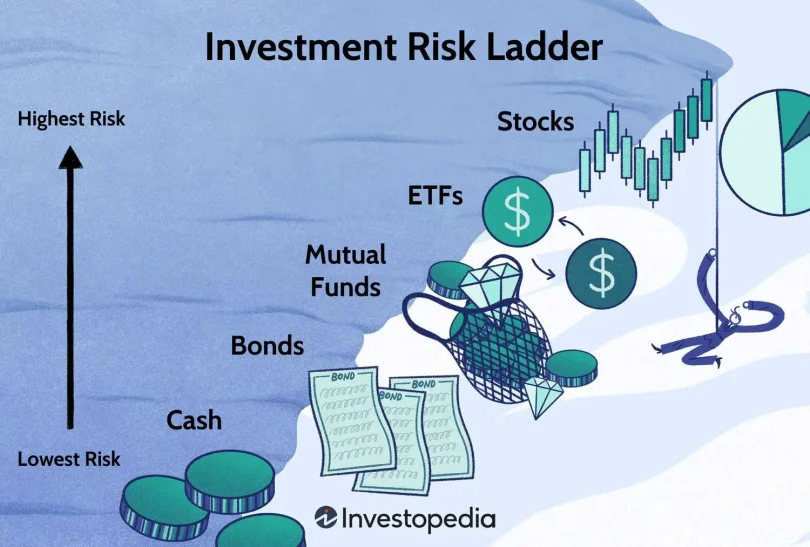
Every investment carries some level of risk. Generally, investments with higher potential returns also involve greater risk.
Here’s a simple breakdown:
| Investment Type | Risk Level | Potential Return |
|---|---|---|
| Savings Accounts | Very Low | Low |
| Bonds | Low to Moderate | Moderate |
| Index Funds | Moderate | Moderate to High |
| Individual Stocks | High | High |
| Cryptocurrency | Very High | Extremely High |
As a beginner, understanding your risk tolerance is important. Ask yourself:
- How comfortable am I with market fluctuations?
- Can I leave my money invested for several years?
- Would temporary losses cause panic?
Long-term investors usually tolerate short-term market declines better because they focus on future growth rather than daily price changes.
Common Types of Investments
Stocks
Stocks represent ownership in a company. When you buy shares, you own a small portion of that business.
If the company performs well, your shares may increase in value. Some companies also pay dividends, which are regular payments to shareholders.
Stocks offer strong long-term growth potential but can be volatile in the short term.
Bonds
Bonds are essentially loans made to governments or companies. In return, investors receive interest payments over time.
Bonds are generally more stable than stocks but usually provide lower returns.
Many investors use bonds to reduce portfolio risk.
Mutual Funds
A mutual fund pools money from many investors to purchase a diversified collection of assets.
Professional fund managers handle investment decisions, making mutual funds beginner-friendly.
However, some mutual funds charge higher fees, which can reduce overall returns over time.
Index Funds
Index funds are one of the most popular investment options for beginners.
These funds track a market index, such as the S&P 500, instead of trying to outperform the market.
Benefits include:
- Low fees
- Diversification
- Simplicity
- Strong long-term performance
Many financial experts recommend index funds as a starting point for new investors.
Exchange-Traded Funds (ETFs)
ETFs are similar to index funds but trade like stocks throughout the day.
They often provide low-cost diversification and flexibility, making them attractive for beginner investors.
Real Estate
Real estate investing involves purchasing property to generate rental income or profit from appreciation.
While real estate can build wealth, it usually requires more capital, research, and maintenance than stock investing.
Some beginners prefer Real Estate Investment Trusts (REITs), which allow investors to gain real estate exposure without owning physical property.
How Much Money Do You Need to Start Investing?
One of the biggest myths about investing is that you need thousands of dollars to begin.
Today, many platforms allow beginners to start investing with very small amounts. Some apps even offer fractional shares, meaning you can buy part of an expensive stock instead of a full share.
The most important factor is consistency, not the starting amount.
Even investing $50 or $100 per month can make a difference over time.
Building Your First Investment Plan
1. Set Clear Financial Goals
Before investing, identify your goals.
Examples include:
- Retirement savings
- Emergency fund growth
- Buying a house
- Financial independence
- Long-term wealth building
Your goals help determine your investment timeline and risk level.
2. Create an Emergency Fund
Before investing heavily, build an emergency fund covering at least 3–6 months of essential expenses.
This helps prevent you from selling investments during financial emergencies.
3. Pay Off High-Interest Debt
High-interest debt, especially credit card balances, can outweigh investment gains.
If your debt interest rate is extremely high, prioritizing repayment may provide a better financial return than investing.
4. Choose an Investment Account
Common investment accounts include:
- Retirement accounts
- Brokerage accounts
- Employer-sponsored plans
- Education savings accounts
The right account depends on your goals, tax situation, and location.
5. Diversify Your Investments
Diversification means spreading investments across multiple assets to reduce risk.
Instead of investing all your money into one company or sector, diversification helps balance potential losses.
A diversified portfolio may include:
- Stocks
- Bonds
- ETFs
- International investments
- Real estate exposure
Diversification cannot eliminate risk completely, but it helps manage it.
Understanding Long-Term Investing

Successful investing is usually boring.
Many beginners think investing requires constant trading, predicting market movements, or chasing trending stocks. In reality, long-term investing often outperforms frequent trading.
Markets naturally rise and fall over time.
y=e0.07xy=e^{0.07x}
Historically, long-term market growth has rewarded patient investors who stay invested consistently.
Trying to time the market is difficult, even for professionals.
A disciplined strategy often includes:
- Investing regularly
- Staying diversified
- Ignoring short-term noise
- Holding investments for years
Common Beginner Investing Mistakes
Investing Without Research
Never invest in something simply because it’s trending online or recommended by influencers.
Understand what you’re investing in and how it works.
Letting Emotions Control Decisions
Fear and greed often lead to poor investment decisions.
Panic selling during market declines can lock in losses, while emotional buying during hype cycles may lead to overpaying.
Ignoring Fees
Investment fees may seem small, but they can significantly impact long-term returns.
Always check:
- Management fees
- Trading commissions
- Expense ratios
- Hidden charges
Low-cost investments often outperform expensive alternatives over time.
Lack of Diversification
Putting all your money into one stock or sector increases risk.
Diversification helps reduce the impact of poor-performing investments.
Expecting Quick Profits
Investing is not a get-rich-quick strategy.
Building wealth usually takes years of patience, discipline, and consistency.
How to Start Investing Step by Step
Here’s a simple beginner roadmap:
Step 1: Learn the Basics
Understand fundamental concepts like:
- Stocks
- Bonds
- ETFs
- Risk
- Diversification
- Compound growth
Step 2: Define Your Goals
Decide why you’re investing and how long you plan to keep your money invested.
Step 3: Build a Budget
Identify how much you can invest consistently each month.
Even small contributions matter.
Step 4: Open an Investment Account
Choose a reputable investment platform with beginner-friendly tools and low fees.
Step 5: Start With Diversified Investments
Many beginners start with broad index funds or ETFs for simplicity and diversification.
Step 6: Invest Consistently
Consistency matters more than perfect timing.
Automatic monthly investments can help build discipline.
Step 7: Stay Patient
Long-term investing rewards patience.
Avoid constantly checking your portfolio or reacting emotionally to short-term market changes.
Active vs Passive Investing
Active Investing
Active investors try to beat the market by selecting specific investments.
This approach requires more research, time, and risk.
Passive Investing
Passive investing focuses on matching market performance through index funds or ETFs.
Many beginners prefer passive investing because it’s:
- Simpler
- Lower cost
- Less time-consuming
- Historically effective over long periods
Should Beginners Invest in Cryptocurrency?
Cryptocurrency attracts many new investors because of its rapid growth stories. However, crypto markets are extremely volatile and unpredictable.
Beginners should approach cryptocurrency cautiously and avoid investing money they cannot afford to lose.
If you choose to invest in crypto, consider keeping it as a small part of a diversified portfolio rather than your primary investment strategy.
The Importance of Consistency
One of the most powerful investing habits is consistency.
Regular investing helps reduce the impact of market volatility through a strategy called dollar-cost averaging.
Average Cost=Total InvestmentTotal Shares Purchased\text{Average Cost}=\frac{\text{Total Investment}}{\text{Total Shares Purchased}}
This approach involves investing a fixed amount at regular intervals regardless of market conditions.
Over time, consistency may matter more than trying to buy at the perfect moment.
How to Track Your Progress
Monitoring your investments occasionally is important, but avoid obsessing over daily market changes.
Review your portfolio periodically to ensure it still aligns with your goals and risk tolerance.
You may also rebalance your portfolio over time by adjusting allocations when certain investments grow faster than others.
Final Thoughts
Starting your investing journey may feel overwhelming at first, but it becomes easier once you understand the basics.
You don’t need to predict the market, become a financial expert overnight, or invest huge amounts of money to begin building wealth.
The most important steps are:
- Start early
- Invest consistently
- Stay diversified
- Focus on long-term growth
- Avoid emotional decisions
A simple, disciplined investment strategy can help you build financial confidence and create long-term opportunities for yourself.
Remember that investing is a journey, not a race. The earlier you begin learning and investing responsibly, the more time your money has to grow.