

Investing is one of the most effective ways to grow wealth, achieve financial freedom, and secure your future. Yet many people hesitate to invest because the process seems complicated, risky, or overwhelming. The truth is that successful investing is not about luck or timing the market perfectly. It is about understanding proven investment strategies and applying them consistently over time.
Whether you are a beginner starting with a small amount of money or an experienced investor looking to improve your portfolio, the right investment strategy can help you make smarter financial decisions. Different strategies work for different goals, risk tolerances, and time horizons. Some investors focus on steady long-term growth, while others prioritize income, diversification, or capital preservation.
In this guide, we will explore the most effective investment strategies, explain how they work, and help you choose the approach that aligns with your financial goals.
What Are Investment Strategies?
Investment strategies are structured approaches investors use to allocate money in order to achieve specific financial objectives. A strategy acts as a roadmap for making investment decisions, helping investors determine where to invest, how much risk to take, and when to buy or sell assets.
A well-planned investment strategy typically considers several factors:
- Financial goals
- Risk tolerance
- Investment timeline
- Market conditions
- Asset allocation
- Diversification
Without a strategy, investors often make emotional decisions based on fear or excitement, which can lead to poor financial outcomes. A disciplined approach provides clarity and consistency, especially during periods of market volatility.
Why Investment Strategies Matter
Many people believe investing is simply about choosing winning stocks. However, long-term success depends more on strategy than individual investment picks.
Here are some key reasons investment strategies are important:
Reduces Emotional Decision-Making
Markets rise and fall regularly. Investors without a strategy often panic during downturns or become overly aggressive during bull markets. A structured plan helps maintain discipline.
Improves Risk Management
Every investment carries some level of risk. A good strategy balances potential returns with acceptable levels of risk.
Helps Achieve Financial Goals
Different goals require different strategies. Saving for retirement, buying a home, or building passive income all involve unique investment approaches.
Encourages Long-Term Thinking
Successful investing is usually a marathon rather than a sprint. Strategies help investors stay focused on long-term results instead of short-term market fluctuations.
Understanding Risk Tolerance
Before selecting an investment strategy, it is important to understand your risk tolerance. Risk tolerance refers to your ability and willingness to endure market volatility and potential losses.
Investors generally fall into three categories:
Conservative Investors
Conservative investors prioritize protecting their capital over maximizing returns. They usually prefer lower-risk investments such as bonds, dividend-paying stocks, or savings instruments.
Moderate Investors
Moderate investors seek a balance between growth and safety. They often invest in a diversified portfolio of stocks, bonds, and mutual funds.
Aggressive Investors
Aggressive investors focus on higher returns and are willing to accept greater volatility. They may invest heavily in growth stocks, emerging markets, or alternative investments.
Understanding your comfort level with risk helps determine the most suitable investment strategy.
Long-Term Investing Strategy
Long-term investing is one of the most popular and effective investment strategies. This approach involves buying quality investments and holding them for years or even decades.
The main idea behind long-term investing is that markets generally grow over time despite short-term fluctuations.
Benefits of Long-Term Investing
- Compounding returns increase wealth over time
- Reduced impact of short-term volatility
- Lower transaction costs
- Less emotional stress
- Potential tax advantages
Best Investments for Long-Term Investors
Long-term investors often focus on:
- Index funds
- Exchange-traded funds (ETFs)
- Blue-chip stocks
- Retirement accounts
- Real estate
Patience is the key to success with this strategy. Investors who remain committed through market ups and downs often achieve better results than those who constantly buy and sell.
Value Investing Strategy
Value investing involves identifying undervalued assets that are trading below their intrinsic worth. Investors using this strategy believe the market sometimes misprices companies due to short-term fears or negative sentiment.
Famous investor Warren Buffett is widely known for using value investing principles.
Characteristics of Value Stocks
Value stocks often have:
- Low price-to-earnings ratios
- Strong fundamentals
- Stable earnings
- Solid cash flow
- Established business models
Advantages of Value Investing
- Potential for strong long-term returns
- Lower downside risk
- Opportunity to buy quality assets at discounts
Challenges of Value Investing
- Requires patience
- Market corrections can take time
- Some stocks remain undervalued for years
Value investing works best for disciplined investors who can research companies thoroughly and stay committed for the long term.
Growth Investing Strategy
Growth investing focuses on companies expected to grow revenues and earnings faster than the overall market. These businesses often reinvest profits to expand operations rather than paying dividends.
Technology companies are common examples of growth investments.
Characteristics of Growth Stocks
Growth companies usually have:
- Rapid revenue growth
- Innovative products or services
- High market potential
- Strong competitive advantages
Benefits of Growth Investing
- Higher potential returns
- Exposure to innovative industries
- Opportunity for significant capital appreciation
Risks of Growth Investing
- Higher volatility
- Expensive valuations
- Greater sensitivity to economic changes
Growth investing can be rewarding, but investors must be prepared for larger price swings and occasional losses.
Income Investing Strategy
Income investing focuses on generating consistent cash flow from investments. This strategy is particularly popular among retirees and investors seeking passive income.
Common Income Investments
Income investors often choose:
- Dividend-paying stocks
- Bonds
- Real estate investment trusts (REITs)
- High-yield savings accounts
- Preferred shares
Advantages of Income Investing
- Regular cash flow
- Lower portfolio volatility
- Potential protection during market downturns
Drawbacks of Income Investing
- Slower capital growth
- Inflation may reduce purchasing power
- Some income investments carry interest-rate risk
A balanced income strategy can provide financial stability while still allowing for moderate growth.
Index Investing Strategy
Index investing is a passive investment strategy designed to match the performance of a market index, such as the S&P 500.
Instead of trying to outperform the market, index investors aim to achieve market-average returns with lower costs.
Why Index Investing Is Popular
Index investing has gained popularity because:
- It offers broad diversification
- Fees are usually low
- It requires minimal maintenance
- Historically strong long-term performance
Common Index Investment Options
- S&P 500 index funds
- Total market ETFs
- International index funds
- Bond index funds
Many financial experts recommend index investing for beginners because it is simple, cost-effective, and historically reliable.
Dollar-Cost Averaging Strategy
Dollar-cost averaging involves investing a fixed amount of money at regular intervals regardless of market conditions.
For example, an investor may contribute a certain amount every month into a retirement account or ETF.
Benefits of Dollar-Cost Averaging
- Reduces emotional investing
- Minimizes the impact of market timing
- Encourages consistent investing habits
- Smooths out purchase prices over time
This strategy works especially well for salaried individuals who invest part of their income regularly.
Diversification Strategy
Diversification is one of the most important principles in investing. It involves spreading investments across multiple asset classes, industries, and geographic regions.
The goal is to reduce risk by avoiding overexposure to a single investment.
Types of Diversification
Investors can diversify through:
- Stocks and bonds
- Domestic and international assets
- Different industries
- Real estate and commodities
- Small-cap and large-cap companies
Benefits of Diversification
- Reduces portfolio volatility
- Protects against major losses
- Improves long-term stability
Diversification does not eliminate risk completely, but it can significantly improve the balance between risk and reward.
Real Estate Investing Strategy
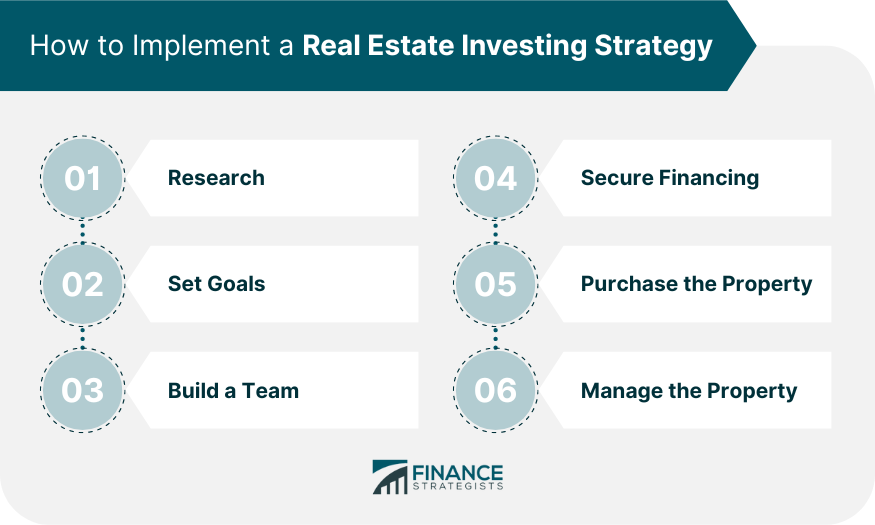
Real estate remains a popular investment strategy because it offers income potential, appreciation, and diversification.
Ways to Invest in Real Estate
Investors can gain exposure to real estate through:
- Rental properties
- Commercial real estate
- House flipping
- Real estate investment trusts (REITs)
- Real estate crowdfunding platforms
Advantages of Real Estate Investing
- Potential passive income
- Long-term appreciation
- Hedge against inflation
- Tax advantages
Risks of Real Estate Investing
- Property maintenance costs
- Market fluctuations
- Liquidity challenges
- Tenant-related issues
Real estate investing requires careful planning, market research, and financial management.
Asset Allocation Strategy
Asset allocation refers to how investors divide their portfolios among different asset classes.
A common allocation may include:
- Stocks for growth
- Bonds for stability
- Cash for liquidity
- Alternative assets for diversification
Importance of Asset Allocation
Research shows that asset allocation is one of the biggest drivers of long-term investment performance.
The right allocation depends on:
- Age
- Financial goals
- Risk tolerance
- Investment horizon
Younger investors often allocate more money to stocks, while older investors may prioritize bonds and income-producing assets.
Active vs Passive Investing
Another important consideration is choosing between active and passive investing.
Active Investing
Active investors attempt to outperform the market by selecting individual stocks or timing market movements.
Pros
- Potential for higher returns
- Flexibility in changing markets
- Opportunity to exploit market inefficiencies
Cons
- Higher fees
- Greater time commitment
- Higher risk of underperformance
Passive Investing
Passive investing aims to track the market rather than beat it.
Pros
- Lower costs
- Simplicity
- Historically competitive returns
Cons
- Limited flexibility
- Market-average performance
Many investors combine both approaches to create a balanced investment strategy.
Common Mistakes Investors Should Avoid
Even the best investment strategies can fail if investors make poor decisions. Avoiding common mistakes is essential for long-term success.
Trying to Time the Market
Predicting short-term market movements is extremely difficult. Investors who constantly move in and out of the market often miss important growth periods.
Ignoring Diversification
Putting all your money into a single investment increases risk significantly.
Letting Emotions Drive Decisions
Fear and greed are major causes of investment mistakes. Emotional decisions often lead to buying high and selling low.
Neglecting Research
Investors should understand what they are investing in and why.
Focusing Only on Short-Term Results
Long-term performance matters more than daily market fluctuations.
How to Choose the Right Investment Strategy
Choosing the right strategy depends on your personal circumstances and goals.
Here are a few steps to help guide your decision:
Define Your Goals
Identify what you want to achieve through investing. Common goals include:
- Retirement planning
- Building wealth
- Generating passive income
- Saving for education
- Financial independence
Assess Your Risk Tolerance
Understand how much volatility you can handle emotionally and financially.
Determine Your Investment Timeline
Longer timelines generally allow for more aggressive strategies.
Start with Diversification
A diversified portfolio can provide a strong foundation for most investors.
Review and Adjust Regularly
Investment strategies should evolve as your financial situation and goals change.
The Importance of Financial Discipline
No investment strategy can guarantee success without discipline and consistency. Successful investors understand that wealth building takes time.
Financial discipline involves:
- Investing consistently
- Avoiding impulsive decisions
- Staying patient during market downturns
- Maintaining realistic expectations
- Continuing to learn about investing
Small, regular investments compounded over many years can lead to substantial financial growth.
Future Trends in Investment Strategies
The investment landscape continues to evolve with technology and changing economic conditions.
Sustainable Investing
Environmental, social, and governance (ESG) investing has become increasingly popular among investors seeking ethical investment opportunities.
Artificial Intelligence and Automation
Robo-advisors and AI-powered investment platforms are making investing more accessible and data-driven.
Cryptocurrency and Digital Assets
Some investors are exploring digital assets as part of diversified portfolios, though these investments remain highly volatile.
Global Investing
International diversification is becoming easier through global ETFs and digital investment platforms.
Investors who stay informed about emerging trends may discover new opportunities while managing risks effectively.
Conclusion
Investment strategies are essential tools for achieving financial success and long-term wealth creation. Whether you choose long-term investing, value investing, growth investing, income investing, or a diversified passive approach, the key is selecting a strategy that matches your goals, risk tolerance, and investment timeline.
Successful investing is not about chasing quick profits or reacting emotionally to market changes. It is about consistency, patience, and making informed decisions over time.
By understanding the fundamentals of investment strategies and applying disciplined financial habits, investors can build stronger portfolios, reduce unnecessary risk, and increase their chances of reaching long-term financial goals.
The earlier you begin investing and the more consistent you remain, the greater the potential rewards in the future.